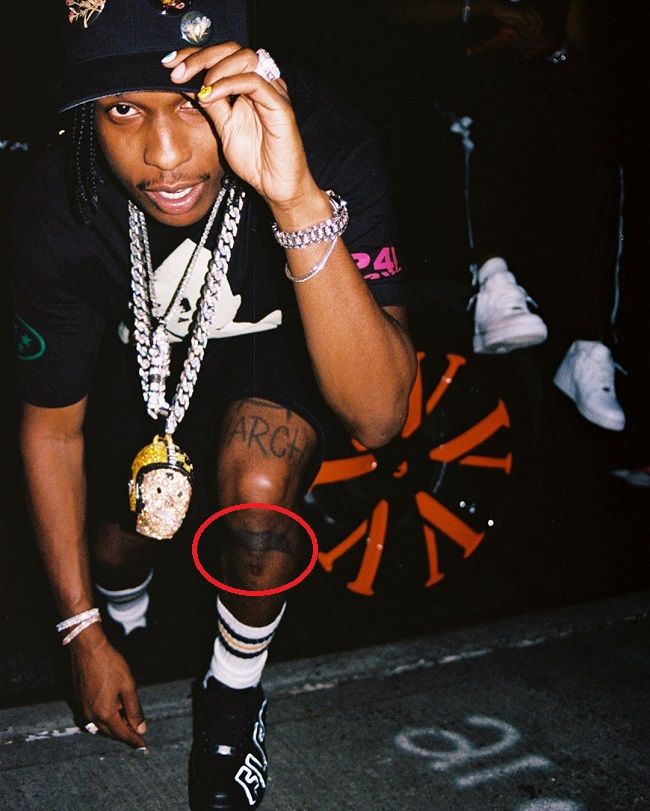
ASAP Rocky's Iconic Tattoos: A Deep Dive
What do the intricate designs on the body of this musician reveal? A visual narrative of the artist's life, personality, and cultural influences.
The artist's body art serves as a visual autobiography, a collection of symbols and imagery reflecting experiences, beliefs, and aesthetic choices. Examples include portraits of loved ones, cultural motifs, abstract patterns, or symbolic representations of personal values. These tattoos are often not just aesthetic choices; they can represent significant events, ideas, or artistic inspirations.
The artist's extensive collection of tattoos offers a rich layer of understanding about the person. Their artistic expression extends beyond music, showcasing a visual narrative that complements their musical output. This body art provides context for interpreting the artist's creative process and personal evolution. The symbolism embedded within these designs allows fans to engage with the artist on a deeper level, revealing the intricate tapestry of personal significance woven into the ink.
| Category | Details |
|---|---|
| Real Name | Rakim Mayers |
| Date of Birth | October 1, 1995 |
| Nationality | American |
| Occupation | Musician, Rapper, Singer |
Delving into the meaning behind the artist's tattoos opens a fascinating window into their life and work. By examining the individual designs, their placement, and their evolution over time, we can gain a richer understanding of this artist's creative spirit.
asap rocky tattoos
The extensive body art of this musician provides a visual narrative, offering insights into personal experiences, aesthetic choices, and cultural influences.
- Symbolism
- Personal meaning
- Cultural references
- Artistic expression
- Design evolution
- Placement significance
- Visual narrative
- Aesthetic choices
These tattoos serve as a visual biography, reflecting the musician's life journey. Symbolism, like an ancient Egyptian scarab, can represent rebirth or protection, revealing deeper meanings. Placement, like a tribal mask on the chest, often carries significance. The evolution of the designs across time showcases artistic growth, illustrating how they mirror life's changing phases. The combination of these aspects constructs a richer understanding of the artist and their identity, extending beyond their music to a fuller artistic expression. Their evolution underscores the constant development of both the artist and their personal narrative.
1. Symbolism
Symbolism plays a crucial role in the aesthetic and narrative construction of an artist's tattoos. Understanding the symbolic elements embedded within designs illuminates the artist's worldview, values, and personal journey. This examination reveals a depth of meaning beyond simple aesthetics.
- Cultural References
Tattoos may incorporate imagery drawn from various cultures. For example, a particular motif might derive from tribal traditions, representing a connection to heritage or lineage. Such imagery offers insight into the artist's cultural engagement and potential influences. This facet highlights the potential interplay between personal experiences and broader cultural contexts.
- Personal Experiences and Memories
A tattoo can serve as a visual representation of significant personal events or cherished memories. A portrait of a loved one, a landscape evocative of a place visited, or a symbolic image linked to a specific life experience can offer glimpses into the artist's emotional landscape and the values embedded within those moments.
- Philosophical or Spiritual Beliefs
Designs may reflect philosophical or spiritual inclinations. Certain imagery, like celestial bodies or sacred geometry, could signify beliefs, values, and interpretations of the universe. This symbolic content often reveals deeply held convictions and their role in shaping the artist's identity.
- Aesthetic and Style Choices
Symbols can also relate to an artist's aesthetic preferences and creative expression. The chosen style, color palette, and overall design can reflect a wider interest in particular artistic movements or trends. A particular style or theme may emerge as a reflection of the artist's engagement with a certain aesthetic.
The combined effect of these symbolic elements creates a visual narrative conveyed through the artist's body art. By examining each symbol and its context within the overall collection of tattoos, a more nuanced understanding of the artist's life, values, and aesthetic preferences emerges.
2. Personal Meaning
Personal meaning significantly shapes the artistic choices behind an artist's body art. The selection and placement of tattoos are often driven by deeply personal associations. These associations can be linked to pivotal life events, significant relationships, cherished memories, or philosophical convictions. The meaning imbued in each piece often reflects a specific narrative, integral to the overall visual autobiography expressed through the tattoos.
For instance, a tattoo of a loved one might represent profound affection and a lasting bond. Alternatively, a symbol signifying a particular philosophy or belief system could underscore a core principle guiding the artist's life. The particular significance derived from each design element contributes to the overall comprehension of the artist's personality and journey. The relationship between personal meaning and the artwork becomes a key factor for interpreting the artist's expression, extending beyond surface aesthetics to uncover more nuanced undercurrents.
Understanding the personal meaning behind tattoos provides valuable insights into the artist's creative process and values. It allows for a deeper engagement with the art, moving beyond mere aesthetics to appreciate the subjective experience and narrative woven into the ink. This nuanced understanding can reveal crucial aspects of the artist's character and the motivations driving their creative endeavors. This in turn helps to contextualize the art within the larger life experience of the creator, enabling a richer appreciation for their work and personal journey.
3. Cultural References
Cultural references frequently appear in the artist's tattoos, often reflecting diverse influences and a wide-ranging engagement with various artistic expressions. These references extend beyond mere aesthetic choices, serving as a window into the artist's understanding and engagement with diverse cultural contexts. The inclusion of cultural motifs, imagery, and symbols within tattoos underscores the artist's awareness and potential appropriation of specific cultural identities. This engagement can manifest as homage, critique, or an exploration of broader cultural concepts.
Examples include the use of tribal patterns, which might draw inspiration from specific African or Indigenous traditions. Depictions of celestial bodies could allude to astrological or spiritual beliefs from different cultures. Moreover, imagery associated with historical events or figures from particular cultures might appear, indicating an interest in that cultural history. Careful analysis of these elements reveals a complex relationship between personal expression and cultural appropriation. The presence and interpretation of these cultural references within the artist's tattoo collection require careful consideration to avoid misrepresentation or harmful implications.
Understanding the connection between cultural references and the artist's tattoos is crucial for a comprehensive interpretation of the work. By examining the specific cultural motifs, the artist's potential intentions, and any potential for misrepresentation, a nuanced understanding of the artist's artistic choices emerges. This understanding illuminates the complex interplay between personal expression and cultural engagement. A deeper analysis of cultural references in the artist's work can provide valuable insights into the motivations behind artistic choices, while also acknowledging the sensitivity inherent in representing diverse cultural traditions. This thoughtful approach can avoid misinterpretations and promote a more respectful engagement with the rich tapestry of cultural influences reflected in the artist's body art.
4. Artistic expression
The artist's tattoos function as a significant component of their broader artistic expression, extending beyond musical compositions. These body adornments offer a visual narrative that complements and contextualizes their artistic output, revealing multiple layers of meaning and personal expression.
- Visual Narrative
The cumulative effect of the tattoos creates a visual narrative. Individual designs, their arrangement, and evolution over time collectively tell a story. This narrative might reflect personal experiences, philosophies, cultural influences, or aesthetic choices. The body becomes a canvas for a visual autobiography, adding a unique dimension to the artist's overall artistic presentation. For instance, the placement and style of certain tattoos could directly relate to the musical themes or periods explored in their work.
- Multifaceted Aesthetics
Tattoos often incorporate various aesthetic elements, including design styles, color palettes, and symbolic imagery. The diversity of these aesthetic choices can reflect the artist's interest in diverse artistic movements, from traditional tribal patterns to contemporary abstract designs. The interplay of these elements creates a visually rich and multi-layered portrayal of the artist's aesthetic preferences, which may also align with specific aesthetic themes present in their music.
- Symbiotic Relationship with Music
The tattoos might be intentionally connected to the artist's musical output, either thematically or conceptually. Specific designs or placements could represent musical ideas, periods in the artist's career, or collaborations. The tattoos function in tandem with the music, expanding its scope and evoking a deeper response in the viewer. This interconnectedness suggests a unified artistic vision.
- Beyond Surface Aesthetics
The artist's tattoos extend beyond simple aesthetic choices; they serve as a conduit for conveying personal expression and articulating complex ideas. The artist's body art, in this context, becomes a form of self-expression, mirroring the artist's inner world, philosophy, and creative process. This deeper layer of meaning is reflected in the intricate details and placement of certain tattoos, which often hold symbolic value, conveying richer interpretations.
Ultimately, the artist's tattoos are not just adornments; they are an integral part of their artistic statement. This fusion of body art and music highlights the multifaceted nature of artistic expression and suggests a broader artistic vision encompassing both the sonic and visual realms. The artists body serves as an extension of their creative output, enriching the viewer's understanding of the work by offering more than just visual aesthetics.
5. Design Evolution
The evolution of an artist's tattoo designs can offer a compelling insight into their personal growth, aesthetic development, and broader creative journey. For the artist in question, the evolution of tattoo designs provides a nuanced understanding of their artistic development, aesthetic preferences, and potentially, their life experiences. Tracing the changes in design elements, style, and symbolism allows for a more comprehensive interpretation of their creative output. This progression reveals potential shifts in personal values or artistic influences over time.
Examining specific examples of design changesfrom earlier, simpler pieces to later, more intricate or symbolic onescan reveal a pattern of development. For example, a shift from tribal-inspired designs to more abstract or portrait-oriented pieces might suggest a change in artistic focus or a broadening of aesthetic considerations. The evolution of design can mirror significant life events, like a relationship change or a career transition, reflected in the tattoos that accompany them. Similarly, a shift in style from minimalist to maximalist designs could indicate a changing relationship with visual complexity. These visual changes can be examined in context with the artist's public statements or musical output for a more comprehensive understanding. Careful analysis of design evolution can illuminate the artist's broader creative development and its connection to their life story.
This understanding of design evolution is crucial for fully appreciating the artist's work. It moves beyond a superficial examination of aesthetic choices to unveil the personal, cultural, and artistic motivations behind the creative decisions. By recognizing the evolution in design, a more nuanced appreciation of the artist's development emerges, thereby enriching the overall interpretation of their artistic journey, which ultimately transcends just the aesthetic. The analysis of design evolution provides a pathway to a deeper understanding of the artist's multifaceted creative personality.
6. Placement significance
The location of tattoos on the body often holds significance beyond aesthetic appeal. Placement decisions are frequently not arbitrary; they frequently carry personal, cultural, or symbolic meaning. In the context of an artist's body art, placement can be a crucial element of the overall narrative conveyed. For example, a prominent tattoo on the chest might symbolize strength or a defining moment, while a delicate piece on the wrist could represent a more intimate or personal experience. The significance of placement amplifies the impact of each individual design, contributing to a deeper understanding of the artist's identity and experiences.
Careful consideration of placement can reveal deeper connections between the tattoo and the artist's life. A tattoo on the arm, a prominent area, could signify a physical challenge overcome or a personal strength. Conversely, a smaller, more hidden tattoo might symbolize a private memory or a subtle expression of an inner belief. The placement context is integral to interpreting the design's full meaning. Studying the placement pattern of tattoos can reveal the artist's priorities and the stories they wish to communicate, both explicitly and implicitly. Placement choices in the artist's body art likely contribute significantly to the overall narrative they intend to portray, acting as crucial compositional elements in the visual autobiography expressed through these tattoos.
Understanding the significance of placement within an artist's body art adds depth and nuance to the interpretation of their creative work. It transcends a superficial examination of aesthetics, revealing a multifaceted narrative that mirrors the artist's life and experiences. By considering the deliberate choices made in placement, a more complete and insightful understanding of the body art is achieved. This deeper understanding contributes to a more holistic appreciation for the artistic endeavor as a whole.
7. Visual narrative
The concept of a visual narrative, as applied to the tattoos of the musician, signifies a multifaceted representation of personal experiences, aesthetic choices, and cultural influences. Tattoos function as visual representations of a life story, conveyed through symbolic imagery, design evolution, and placement. These elements collectively narrate a complex narrative, transcending the purely aesthetic and delving into the artist's identity, evolution, and connections to the world around them. The artist's body serves as a canvas for this visual autobiography, offering a multifaceted perspective on their life's journey, extending beyond musical expression alone. A significant cause-and-effect relationship exists between the artist's experiences and the resulting visual narrative presented in the tattoos. For instance, a tattoo commemorating a meaningful event can be directly linked to that experience, establishing a clear cause-and-effect connection.
Understanding the visual narrative in an artist's tattoos is crucial for a more comprehensive appreciation of their work. It allows for a deeper engagement with the art form, enabling a contextual understanding that moves beyond superficial aesthetics. This understanding is vital for art enthusiasts, academics, and anyone interested in comprehending the connections between personal expression and artistic output. Analysis of the visual narrative within the collection of tattoos provides valuable insights into the artist's motivations, values, and the evolving relationship between personal and cultural influences. For example, the presence of specific cultural motifs might indicate an exploration of or connection to that culture. Furthermore, changes in style or symbolism over time can illuminate personal growth, artistic shifts, or key life events. This deeper level of understanding also enhances the viewer's interpretation and emotional engagement with the artwork, which often resonates more meaningfully with a richer understanding of the context behind the imagery.
In conclusion, the visual narrative conveyed through tattoos provides a unique lens through which to examine an artist's life, creative process, and cultural interactions. By understanding the symbolic elements, design evolution, and placement of tattoos, viewers gain access to a personal narrative that complements and enhances the appreciation of the artist's overall creative output. This comprehensive approach to interpreting visual narratives in body art offers significant insights into individual journeys and the broader cultural landscape influencing the artist.
8. Aesthetic Choices
Aesthetic choices are fundamental to the interpretation of an artist's tattoos. These choices are not arbitrary; rather, they are often deeply intertwined with the artist's broader creative vision and personal identity. The selection of design styles, color palettes, and symbolic imagery within tattoos reveals deliberate preferences, influencing the overall visual narrative presented on the body. A particular aesthetic preference, for instance, a predilection for geometric patterns, might suggest an interest in specific artistic movements or a philosophical inclination. Similarly, the artist's choice of color palette could mirror trends in fashion, personal preferences, or symbolic representations specific to various cultures or historical periods. These deliberate choices, considered in tandem, shape the overall visual narrative presented through the artist's body art.
Consider, for example, the shift from simpler tribal designs to more intricate and detailed portraits. This change in aesthetic preference could reflect personal growth, a broadening of artistic interests, or a reflection of shifting values. The meticulous approach to design and the choice of elaborate details, like intricate shading or realistic rendering of portraits, suggests an appreciation for precision and complexity in artistic expression. Conversely, minimalist designs could indicate a focus on simplicity and essential elements, potentially reflecting a desire for a more concise or understated self-presentation. These aesthetic choices are integral to interpreting the artist's overall visual narrative. This understanding is crucial in appreciating the nuanced communication occurring within the tattoo collection.
Ultimately, acknowledging aesthetic choices in an artist's tattoos is essential for a comprehensive interpretation. It allows for a deeper understanding of the artist's creative vision and personal evolution. Understanding the underlying motivations behind these aesthetic choices provides crucial context, extending beyond the purely visual to encompass the artist's values, influences, and life experiences. Moreover, this analysis has practical implications for fans and scholars of the artist. For instance, it informs discussions about stylistic trends and artistic development, enhancing appreciation and critical engagement with the work. By understanding these intricate connections between aesthetic choices and the artist's body art, a more nuanced and insightful interpretation of the artist's identity emerges.
Frequently Asked Questions about ASAP Rocky's Tattoos
This section addresses common inquiries regarding the extensive body art of the musician ASAP Rocky. The questions and answers aim to provide a clear and informative overview of the topic, drawing on publicly available information and established interpretations.
Question 1: What is the significance of placement in ASAP Rocky's tattoos?
Answer 1: Tattoo placement often carries meaning. A prominent tattoo on the chest might signify strength or a defining moment, while a more concealed one might represent a private memory or personal belief. Careful consideration of placement adds another layer to the interpretation of the tattoo's significance.
Question 2: How do ASAP Rocky's tattoos reflect cultural influences?
Answer 2: The artist's tattoos frequently incorporate imagery and designs from various cultures, often displaying homage, critique, or exploration of cultural concepts. These references can range from tribal patterns to depictions of historical figures, offering insight into the artist's engagement with the world beyond their personal experience.
Question 3: What is the role of symbolism in ASAP Rocky's tattoos?
Answer 3: Symbolism is a key component, with individual designs reflecting personal values, experiences, and philosophical leanings. Symbols may represent significant events, cherished memories, or broader spiritual or philosophical viewpoints. Deciphering these symbols reveals deeper layers of meaning within the artist's body art.
Question 4: How does the evolution of ASAP Rocky's tattoo designs illustrate his artistic development?
Answer 4: Changes in design style, complexity, and symbolism can mirror significant life events, career transitions, or artistic growth. Observing these changes reveals a progression in aesthetic choices, reflecting broader personal and artistic development.
Question 5: What is the broader significance of ASAP Rocky's tattoos beyond aesthetic appeal?
Answer 5: The collection of tattoos acts as a visual narrative of the artist's life, contributing to a more profound understanding of their identity, personality, and experiences. The tattoos extend beyond mere adornment, becoming a significant element in understanding the artist's broader creative expression and personal narrative.
These frequently asked questions provide a framework for understanding the significance of ASAP Rocky's tattoos. Further research and analysis can deepen this understanding and offer further insights.
Moving forward, analysis will consider the evolution of tattoo design, aesthetic choices, and cultural references in additional contexts.
Conclusion
ASAP Rocky's extensive collection of tattoos serves as a complex visual narrative, offering a profound insight into the artist's personal experiences, cultural influences, and aesthetic choices. The symbolism embedded within designs, the evolution of styles, and the significance of placement contribute to a multifaceted understanding of the musician's identity and creative development. Cultural references within the artwork reveal an engagement with diverse traditions, while personal experiences and memories are often visually depicted. The interplay between these elements underscores the tattoos' role as an extension of the artist's creative output, transcending mere adornment and enriching the overall interpretation of their work. Analysis of these factors paints a compelling picture of an evolving identity and a dynamic relationship with art and culture.
The exploration of ASAP Rocky's tattoos unveils a rich tapestry of personal expression. Further analysis of the artist's body art, considered alongside their music, provides a more comprehensive understanding of their multifaceted creative approach. Future investigations into the evolution of the tattoos and their connections to cultural and social trends can further elucidate the intricate narratives embodied in this visual autobiography. Such critical engagement with the artist's work expands the understanding of creative expression, demonstrating how visual art forms can communicate complex ideas and personal histories.