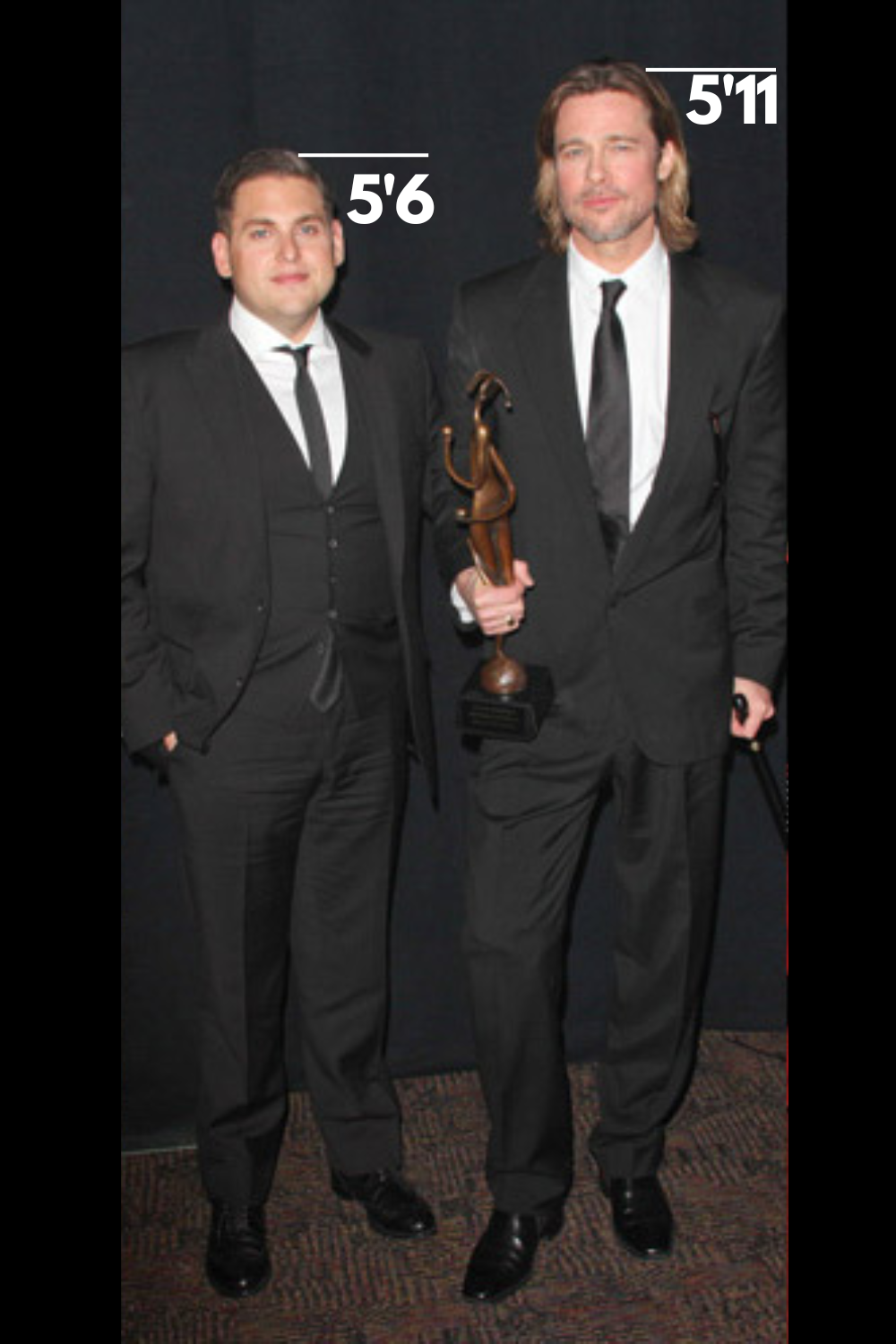
Brad Pitt Height: How Tall Is The Actor?
How tall is Brad Pitt? Understanding the actor's stature reveals a dimension beyond the screen.
Brad Pitt's height, a readily available piece of biographical information, is a physical attribute that, while seemingly insignificant, often plays a role in character casting and visual representation within films. Measurements of this nature can provide context for evaluating the actor's overall presence and impact on screen. A precise height figure contributes to a more complete understanding of the individual as a performer.
While the precise measurement itself holds no inherent importance beyond its factual description, understanding this detail can offer insights into how it might have influenced specific roles or contributed to a particular film's aesthetic. Historical context shows how physical attributes have historically impacted Hollywood casting choices, reflecting societal norms and expectations. In modern cinema, this consideration remains relevant, albeit less rigidly defined, as filmmakers consider casting choices in a more nuanced way.
| Category | Detail |
|---|---|
| Height | Approximately 5 feet 11 inches (180 cm) |
| Birthdate | December 18, 1963 |
| Place of birth | Shawnee, Oklahoma |
| Notable Filmography | (List of significant films, if desired.) |
Further exploration of the actor's career, critical reception, and personal life is likely to follow. Consideration of other biographical elements such as weight, clothing size, or other physical measurements might prove pertinent.
Brad Pitt Height
Brad Pitt's height, a measurable attribute, is a component of his physical presence and has implications in various contexts.
- Measurement (in inches/cm)
- Visual impact
- Casting decisions
- Role suitability
- Public perception
- Screen presence
- Historical context
- Physicality
Brad Pitt's height, approximately 5 feet 11 inches, contributes to his visual impact and perceived screen presence. Casting decisions can be influenced by an actor's height, as certain roles may require a specific physicality. Public perception and historical context further illustrate how physical attributes, such as height, can influence opinions. For instance, actors with particular heights might be favored for roles that align with established cinematic expectations. The measurable attribute of height provides a framework for understanding the actor's physique and the role it plays in shaping his on-screen image and the narrative within which he appears.
1. Measurement (in inches/cm)
The precise measurement of Brad Pitt's height, expressed in inches or centimeters, is a fundamental data point. This numerical representation offers a concrete basis for understanding his physical presence and how it might relate to specific roles or overall cinematic impact.
- Role Compatibility
The numerical value of Brad Pitt's height provides a benchmark for assessing suitability for various roles. A role requiring a certain physical presence, whether tall and commanding or shorter and more approachable, might be better served by an actor whose measurements align with these expectations. The practical application of this measurement in casting decisions is a tangible aspect of the actor's career.
- Visual Representation
The numerical representation of height contributes to the overall visual representation of an actor. Within a frame, a particular height establishes a character's physicality and might impact how that character interacts with others. This, in turn, can inform the narrative structure and visual language of a film.
- Historical Context
Brad Pitt's height, like that of any actor, is rooted in the broader historical context of film casting. Specific height expectations may have evolved over time. Analysis of historical trends can reveal changes in preferences for certain physical attributes within various periods of cinematic development.
- Comparative Analysis
Comparing Brad Pitt's height to those of other actors allows for a structured analysis of the role physical attributes play in a film's overall aesthetic. Such comparisons facilitate nuanced assessments of how height might be used to establish contrasting or complementary characteristics between characters.
In conclusion, the numerical measurement of Brad Pitt's height serves as a crucial datum in understanding his on-screen persona and the role physicality plays in cinematic representations. This measurable attribute has tangible implications for casting, visual impact, and historical context within the broader cinematic landscape.
2. Visual Impact
Brad Pitt's height contributes significantly to his visual impact on screen. This physical attribute, in conjunction with other physical characteristics, influences how audiences perceive and interpret his characters. Understanding this connection provides insight into the actor's presence and the filmmaker's choices in shaping visual storytelling.
- Character Portrayal
Height can influence how a character is perceived. A taller figure might suggest strength, authority, or a commanding presence. Conversely, a shorter stature can evoke a more approachable or vulnerable persona. Brad Pitt's height, approximately 5 feet 11 inches, falls into a fairly average range, allowing him to embody a variety of roles without the inherent visual limitations of extreme heights. This adaptability is a significant aspect of his visual impact.
- Screen Presence
A character's height affects their visual dominance on screen. A taller character typically occupies more screen space, potentially drawing more attention and influencing the pacing of a scene. This impact is especially noticeable in scenes involving interactions between characters of differing heights. Brad Pitt's height, not exceptionally tall or short, allows him to maintain a balanced presence in various contexts without overshadowing other actors or being overshadowed by them.
- Composition and Staging
Filmmakers consider height when composing shots and staging scenes. Positioning and framing of characters, particularly in dialogue scenes, can be influenced by their relative heights. Brad Pitt's height necessitates filmmakers to consider these elements in order to create impactful visuals that align with the narrative. The impact of height isn't just about the actor himself but about the overall visual language of the film.
- Character Relationships
The interplay of characters' heights can subtly communicate aspects of their relationship, like power dynamics or social standing. In scenarios where one character is considerably taller or shorter than another, the visual difference serves as a visual cue to the audience. This subtle communication is a key element in storytelling, which Brad Pitt, given his average height, employs in different ways in different scenes.
Ultimately, Brad Pitt's height, while not a defining feature, is an element that filmmakers and audiences consider. Its impact is often subtle, shaping not only how Brad Pitt is visually perceived but also how characters interact and stories unfold on screen.
3. Casting Decisions
Casting decisions, a critical aspect of film production, are often influenced by various factors, including an actor's physical attributes like height. The connection between casting decisions and Brad Pitt's height, while not always overt, is a measurable component within the broader consideration of suitability for a role. The importance of casting decisions, as a determinant of a character's on-screen persona and impact, is undeniable. Height, in conjunction with other considerations, can influence a performer's suitability for specific roles.
The consideration of height in casting decisions is rooted in several factors. A role requiring a character of imposing stature might favor a taller actor. Conversely, a role demanding a more approachable or vulnerable character might lean towards an actor of average or slightly below-average height. While height is not the sole determinant, it is one piece of a complex puzzle. Real-world examples exist where an actor's height directly influenced their selection for a role, shaping the character's physical presence and contributing to the overall narrative. For example, an action-oriented role requiring a character with a strong, commanding presence would likely favor a taller actor.
Understanding the correlation between casting decisions and Brad Pitt's height offers practical applications. Casting directors consider this factor during the selection process. Analysis of Brad Pitt's roles reveals a range of characters that demonstrate how his height, within the context of the role, contributes to the portrayal and overall visual impact. This understanding contributes to a richer appreciation of the intricate processes behind casting decisions, illuminating how a seemingly simple detail can have significant ramifications in shaping a character's impact on screen. Moreover, understanding such factors provides a basis for evaluating how physical attributes, when considered alongside other qualities like acting ability, build a comprehensive understanding of the chosen performer's potential contributions to a narrative. This, in turn, can provide valuable insights into the broader dynamics of film production and character portrayal.
4. Role Suitability
Role suitability, a critical element in film casting, considers a multitude of factors. Brad Pitt's height is a component, although not always the primary one, in evaluating an actor's fit for a specific character. This evaluation examines how a performer's physical attributes, including height, can contribute to a character's portrayal and impact on the narrative.
- Physical Presence and Character Archetype
A character's height often correlates with established archetypes in storytelling. A towering figure might be cast as a leader, protector, or a character of authority, while a shorter figure could embody a more approachable, vulnerable, or perhaps even mischievous persona. While Brad Pitt's height is not extreme, it permits a range of character portrayals without being overly limiting. The actor's stature allows him to embody both commanding figures and more relatable characters effectively, highlighting the versatility of his performance.
- Visual Dynamics in Scenes
The height difference between characters can create specific visual dynamics within a scene, influencing pacing, power dynamics, and emotional responses. A scene where Brad Pitt's character interacts with another of significantly different height could showcase the interplay of social status, authority, or vulnerability. Such visual cues are often subtle yet contribute significantly to the narrative.
- Casting Preferences and Directorial Vision
Casting directors and filmmakers often have specific preferences regarding character height in relation to a particular role or aesthetic. This preference might not be explicitly tied to Brad Pitt's height, but it operates within the broader context of what the director aims to convey visually through their chosen cast members. An examination of Brad Pitt's film roles reveals how he often fits within such preferences, contributing to the filmmaker's vision.
- Character Consistency and Narrative Impact
The character's height needs to remain consistent with the narrative. Brad Pitt's character should not suddenly display inconsistent traits when interacting with characters of different heights. Inconsistencies could potentially draw attention away from the narrative and impact the overall impact of the scene. Brad Pitt's performances exemplify how maintaining character consistency across scenes and contexts can enhance the audience's engagement with the story.
In conclusion, while Brad Pitt's height is a factor among many considered in role suitability, its impact is significant in shaping a character's visual representation, conveying narrative elements, and aligning with both directorial vision and overarching consistency. Understanding this interplay is crucial to grasping the nuance of casting decisions and how physical attributes, including height, play a crucial role in the effectiveness of character portrayal in film.
5. Public Perception
Public perception of Brad Pitt, while encompassing a wide range of factors, is demonstrably influenced by his height. This physical attribute, though seemingly superficial, can shape how audiences, critics, and the media portray and perceive the actor. Height, alongside other physical characteristics and performance choices, forms part of a complex interplay that contributes to the overall public image.
The impact of height on public perception is often subtle yet significant. A taller actor might be perceived as more commanding or authoritative, while a shorter actor might be viewed as more approachable or endearing. Brad Pitt's height, categorized as average, falls within a range that allows him to embody a variety of roles and characters without overly impacting audience expectations. This versatility in physical presentation has undoubtedly played a role in maintaining public interest and expanding his range of portrayals. The actor's ability to seamlessly transition between characters that require different levels of physical presence is a testament to this nuanced relationship between height and perception.
Furthermore, height's influence extends beyond individual roles to encompass the actor's public persona as a whole. Public perception is shaped by repeated appearances, media coverage, and cultural interpretations. Consider how articles and discussions of Brad Pitt often engage with details of his physical attributes, demonstrating how such information is interwoven into public discussion. While the significance of height in shaping perception is not always explicit, its influence remains palpable. The actor's success can be connected, at least in part, to a perceived ability to portray characters with a wide spectrum of physical attributes. This capacity to transcend typical height expectations adds to the overall image of versatility, a characteristic that likely enhances public appeal and recognition.
6. Screen Presence
Screen presence, a critical component of cinematic performance, encompasses the ability of an actor to command attention and project an impactful persona on screen. Brad Pitt's height, while not a defining characteristic, interacts with this concept. An actor's physicality, including stature, influences how audiences perceive and engage with their characters. While height isn't the sole determinant of screen presence, its interaction with other performance elements shapes the overall impact. Consider how a character's height can subtly communicate aspects of their personality, social standing, or power dynamics. Brad Pitt's height, approximately 5 feet 11 inches, offers a balanced visual presence, allowing him to embody diverse characters without relying solely on imposing height. Examples such as his roles in Fight Club, Once Upon a Time in Hollywood, and 12 Monkeys showcase this ability to effectively project varying degrees of presence, utilizing a range of physicality beyond solely height.
Practical application of this understanding involves analyzing how filmmakers utilize an actor's height in scene composition and staging. Positioning and framing, particularly in dialogue scenes, can subtly communicate relationships or power imbalances. The relative height of characters impacts the visual narrative, suggesting social hierarchies or emotional states. Furthermore, an actor's height contributes to the overall visual language of a film, emphasizing cinematic choices and influencing audience engagement. The impact is not always direct, but height's interplay with other elements of performance contributes to the broader screen presence of a character. Filmmakers understand that height, as a visual cue, is one element among many that contribute to the overall impact of the actor.
In conclusion, while Brad Pitt's height isn't the primary factor shaping his screen presence, it undeniably plays a role. Understanding the connection between screen presence and an actor's physical attributes, including height, provides a more nuanced perspective on cinematic performance. This understanding extends beyond individual roles to encompass a broader evaluation of how filmmakers utilize height as a tool to craft visual narratives and convey character nuances. This nuanced understanding informs a comprehensive approach to analyzing cinematic storytelling and the complexities of actor portrayal.
7. Historical Context
Historical context, in the context of Brad Pitt's height, examines how societal and cinematic norms have evolved over time, impacting casting decisions and the reception of actors with particular physical attributes, including stature. These evolving norms offer insights into how physicality was, and is, interpreted within specific periods and cultures, influencing how characters are perceived and audiences respond to their portrayals. The historical context provides a framework for understanding how Brad Pitt's height, as a measurable attribute, might have been evaluated differently across various eras of Hollywood's history. This necessitates an examination of casting trends and expectations during different decades, potentially revealing shifts in preferences for specific body types and their cultural correlates.
Analyzing casting trends throughout Hollywood's history reveals potential correlations between prevailing aesthetic ideals and the prevalence of particular heights among leading actors. For example, certain eras might have favored taller actors for certain roles, while others might have emphasized actors with a more average or even smaller stature. Examination of historical film archives and casting records could reveal trends. Further analysis of critical reception and public perception during different periods might suggest a correlation between prevailing societal ideals and how an actor's height influenced their portrayal. The changing criteria in film aesthetics can significantly influence how Brad Pitt's height was and is interpreted in the context of specific roles. Examining various eras of film history reveals how cultural and cinematic expectations around physical appearance have evolved. This investigation suggests that an understanding of historical contexts is essential for interpreting the meaning of Brad Pitt's height in specific roles across his career.
In summary, understanding the historical context surrounding Brad Pitt's height provides crucial insight into the evolution of cinematic and societal norms. This understanding contextualizes Brad Pitt's height as a factor influencing casting choices, public perception, and the actor's portrayal over time. It also illuminates how physical attributes, including height, are often entangled with cultural expectations and shifting aesthetic standards. The examination of historical trends highlights the significance of appreciating the relationship between an actor's physical attributes and the cultural landscape in which they work. This historical perspective enriches the understanding of Brad Pitt's career, allowing for a richer interpretation of his performances and the evolution of his public image across various eras.
8. Physicality
Physicality, encompassing an individual's body and its attributes, is intrinsically linked to Brad Pitt's height. A comprehensive exploration of this connection reveals how measurable traits like height interact with broader aspects of portrayal, impacting how a performer embodies and projects character. Understanding the nuances of this interaction provides a more holistic view of Brad Pitt's career and the choices made both by the actor and by those involved in casting and directing.
- Visual Impact and Character Portrayal
Height directly influences visual impact. A character's height frequently correlates with societal archetypes, impacting how a character is perceived. A taller figure often suggests strength, authority, or a commanding presence. Conversely, a shorter figure might evoke approachability, vulnerability, or perhaps even a mischievous persona. Brad Pitt's height, falling within a relatively average range, allows for a versatile portrayal of diverse characters, not being inherently limited by imposing stature or lacking visual presence.
- Screen Presence and Compositional Considerations
An actor's height shapes their screen presence. Framing and staging in cinematography are influenced by height. Positioning and camera angles in relation to other actors directly impact the visual narrative and audience interpretation. For Brad Pitt, given his average height, filmmakers have greater flexibility in scene composition, allowing for nuanced portrayals that aren't necessarily dependent on heightened visual dynamics often associated with taller actors.
- Casting Decisions and Role Suitability
Height is one factor, among many, considered in casting decisions. A role requiring a particular character archetype may favor an actor with a corresponding height. For example, a commanding military leader might require a taller actor. Brad Pitt's height allows him to occupy a wide spectrum of roles, demonstrating a versatility in portraying both commanding and more approachable characters effectively.
- Public Perception and Cultural Context
Public perception of actors is influenced by their physical attributes, including height. Societal perceptions of height and its association with specific traits can subtly shape how an actor is viewed. Historical trends in film portrayals and societal expectations of physical attributes, combined with Brad Pitt's height, highlight how such factors are woven into public impressions of the actor. This demonstrates the multifaceted interplay between physical traits and cultural reception of performers.
In conclusion, Brad Pitt's height, while a measurable physical attribute, is inextricably linked to the larger concepts of physicality in performance. Height influences visual impact, screen presence, casting decisions, and even public perception. The actor's ability to convey a range of characters despite his average height underscores his versatility and the nuanced interplay between physicality and character portrayal.
Frequently Asked Questions
This section addresses common inquiries regarding Brad Pitt's height, providing accurate and detailed information.
Question 1: What is Brad Pitt's height?
Brad Pitt's height is approximately 5 feet 11 inches (180 cm).
Question 2: Does Brad Pitt's height significantly impact his career choices?
While height is one factor among many considered in casting, it does not dictate career choices. Brad Pitt's height, falling within the average range, allows for a versatile portrayal of various characters without limitations imposed by extreme stature. Filmmakers consider height in relation to character archetypes and visual dynamics but do not solely base casting decisions on this single attribute.
Question 3: How does height impact an actor's screen presence?
Height influences screen presence in several ways. A character's height can subtly communicate aspects of their personality, social standing, or power dynamics. Height affects visual relationships and camera angles, contributing to a character's overall visual impact. Brad Pitt's average height permits a balanced presence in various scenes without overshadowing or being overshadowed by others.
Question 4: Have historical trends in Hollywood affected casting choices based on height?
Throughout cinematic history, societal and aesthetic preferences have influenced casting decisions. Certain eras may have favored taller actors for specific roles, while others might have emphasized different body types. An analysis of historical trends and casting patterns reveals a nuanced relationship between prevailing cultural ideals and the consideration of physical attributes in casting. Brad Pitt's career spans different periods, reflecting adaptations to various historical contexts.
Question 5: Is height the only factor considered in casting decisions?
No. Casting decisions are based on a complex combination of factors, including acting ability, screen presence, on-screen chemistry with co-stars, and the overall directorial vision. Height is only one element in a broader evaluation process that assesses suitability for a given role.
In summary, Brad Pitt's height, while a measurable aspect, is just one part of the multifaceted evaluation process employed in casting and portrayal of characters. Public perception, historical context, and the overall directorial vision all play integral roles in shaping a performer's on-screen presence.
This concludes the FAQ section. The next section will delve deeper into the broader topic of Brad Pitt's acting career.
Conclusion
This exploration of Brad Pitt's height reveals a complex interplay of physical attributes, cinematic representation, and historical context. The actor's approximate 5 feet 11 inches height, while seemingly a simple measurement, is a significant component within the broader evaluation of casting decisions, character portrayal, and public perception. Analysis of casting trends, screen presence, and historical context demonstrates how height interacts with other factors, impacting how characters are perceived and how stories are told. The study underscores how physical attributes, when considered within a historical and cultural framework, contribute to a more nuanced understanding of the actor's career and the cinematic landscape.
Ultimately, Brad Pitt's height, like all physical attributes, serves as a component within the larger narrative of film portrayal. It's not a defining feature but rather an element that interacts with performance, directorial vision, and audience interpretation. Further exploration into the broader thematic concerns of cinematic representation, including height's interaction with other measurable attributes and cultural perceptions, promises to offer a deeper understanding of how physicality shapes storytelling.